
Thailand’s Growing Appetite for Quality Is Creating New Opportunities for European Food
11th September 2026 | Thailand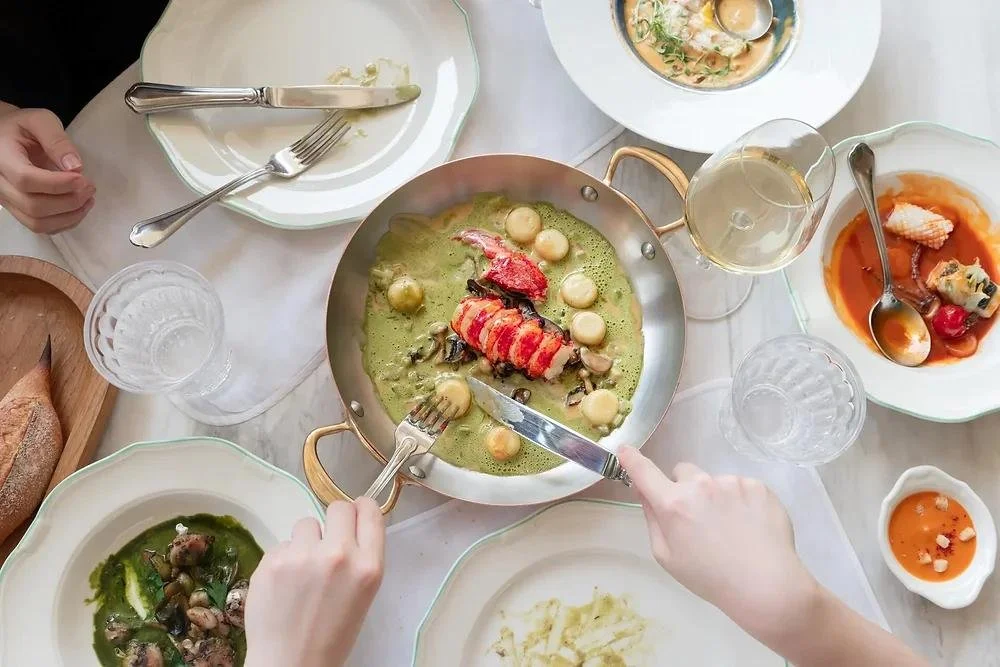
© Palmier by Guillaume Gaillot at the Four Seasons Bangkok.
Thailand’s food culture has long been shaped by strong local flavours, abundant agricultural resources and a deep appreciation of culinary craftsmanship. Now, changing consumer preferences are creating new opportunities for international food and beverage products, particularly those associated with quality, provenance and specialist production.
The shift is taking place against a complicated economic backdrop. Thai consumers remain conscious of value, while demand is developing for products that offer additional benefits, including health, authenticity, convenience and distinctive taste.
For European food producers, this combination is creating an increasingly interesting market.
Quality Is Becoming More Multifaceted
Quality in Thailand’s food market is no longer defined solely by taste or price.
Consumers are becoming more interested in where ingredients originate, how products are produced and what distinguishes one product from another. Food safety, traceability, sustainability and recognised standards are increasingly part of the wider perception of quality.
This creates opportunities for products with a clear provenance and established production heritage.
European food and agricultural products are particularly well positioned in categories where regional identity and specialist production are important. Cheese, dairy, meat, bakery products, confectionery and other speciality foods can carry stories connected to particular regions, production methods and culinary traditions.
The challenge is ensuring that these qualities translate into a proposition that makes sense within the Thai market.
Health and Wellness Are Influencing Food Choices
Health-conscious consumption is another factor reshaping Thailand’s food and beverage landscape.
Demand is developing for products associated with protein, reduced sugar, functional benefits and more balanced nutrition. The trend extends beyond specialist health products into mainstream food and beverage categories.
Thailand's food industry is also responding through new product development, including healthier beverages and products designed around changing consumer needs. Industry forecasts indicate that health-oriented innovation will remain an important part of the country's beverage market as consumer preferences evolve.
For food producers, this means that indulgence and health are increasingly able to coexist. A premium product does not necessarily have to be positioned as an occasional luxury; it can also offer functionality, nutritional value or a particular lifestyle benefit.
Hospitality Provides an Important Route to Discovery
Thailand’s substantial tourism and hospitality industries create another route through which international food products can reach consumers.
Hotels, restaurants and catering businesses can introduce unfamiliar ingredients and products in a context where consumers can experience them before deciding whether to purchase them independently.
This is particularly relevant for speciality European products. A cheese, premium dairy ingredient, cured meat, chocolate or distinctive ingredient may initially be encountered through a restaurant dish, hotel breakfast, dessert or curated dining experience.
Foodservice can therefore play a role in building familiarity as well as generating direct demand.
European Provenance Has a Distinctive Role
Europe's food sector has an unusually strong connection between products and place.
Regional specialities, traditional production methods and geographical indications provide a framework for communicating provenance. Protected Designation of Origin (PDO) and Protected Geographical Indication (PGI) status, together with EU Organic certification, can provide additional signals of authenticity and production standards.
However, European heritage alone is unlikely to guarantee success.
Thailand has its own sophisticated food culture, and consumers are accustomed to innovation and international influences. European products therefore need to offer something genuinely distinctive, whether that is flavour, functionality, craftsmanship, provenance or versatility.
Trade Conditions Remain an Important Consideration
One of the biggest factors influencing the competitiveness of European food products in Thailand remains market access.
The European Union and Thailand relaunched negotiations for a comprehensive Free Trade Agreement in 2023, with discussions continuing through 2026. The ninth round was held in June 2026, with negotiations covering areas including market access, sanitary and phytosanitary measures, intellectual property and other trade-related issues.
There is therefore potential for the trading relationship to become more favourable over time, but an EU-Thailand FTA should not yet be treated as an established preferential trade arrangement.
For the moment, tariffs, regulatory requirements and market-entry considerations continue to influence the competitiveness of imported European food products.
A Market Where Quality and Value Must Coexist
Thailand's opportunity for international food brands is not simply the result of consumers becoming willing to pay more.
The more significant development is the increasing sophistication of the value equation.
Consumers may be prepared to pay a premium when they understand what makes a product different and why that difference matters. At the same time, economic pressures mean that premium products still need to demonstrate clear value.
This creates space for products that combine quality with relevance: ingredients with a strong provenance, products with recognised credentials, healthier alternatives, distinctive flavours or formats that fit changing lifestyles.
A Broader Role for European Food
The relationship between Thailand and Europe is developing at a time when global food markets are becoming increasingly interconnected.
The EU was Thailand’s fourth-largest trading partner in goods in 2025, accounting for 7.2% of Thailand’s goods trade, while bilateral goods trade reached €44.3 billion. European investment in Thailand is also significant, with EU outward foreign direct investment stocks reaching €24.1 billion in 2024.
Food is only one part of this wider economic relationship, but changing consumer preferences are creating new possibilities within the sector.
Thailand’s food market is unlikely to be defined by premiumisation alone. Instead, its next phase may be shaped by a combination of quality, health, provenance, convenience and value.
For European food producers, that creates an opportunity to compete not simply on where a product comes from, but on what that origin represents: expertise, authenticity, distinctive ingredients and a quality proposition that has relevance in a changing Thai market.
We work with European suppliers of high-quality ingredients, heritage food and beverage brands, and innovative nutritional solutions. If you would like to explore opportunities to introduce your products to markets across Asia, please get in touch with us via the Contact Us page.