
30th October 2026 | Korea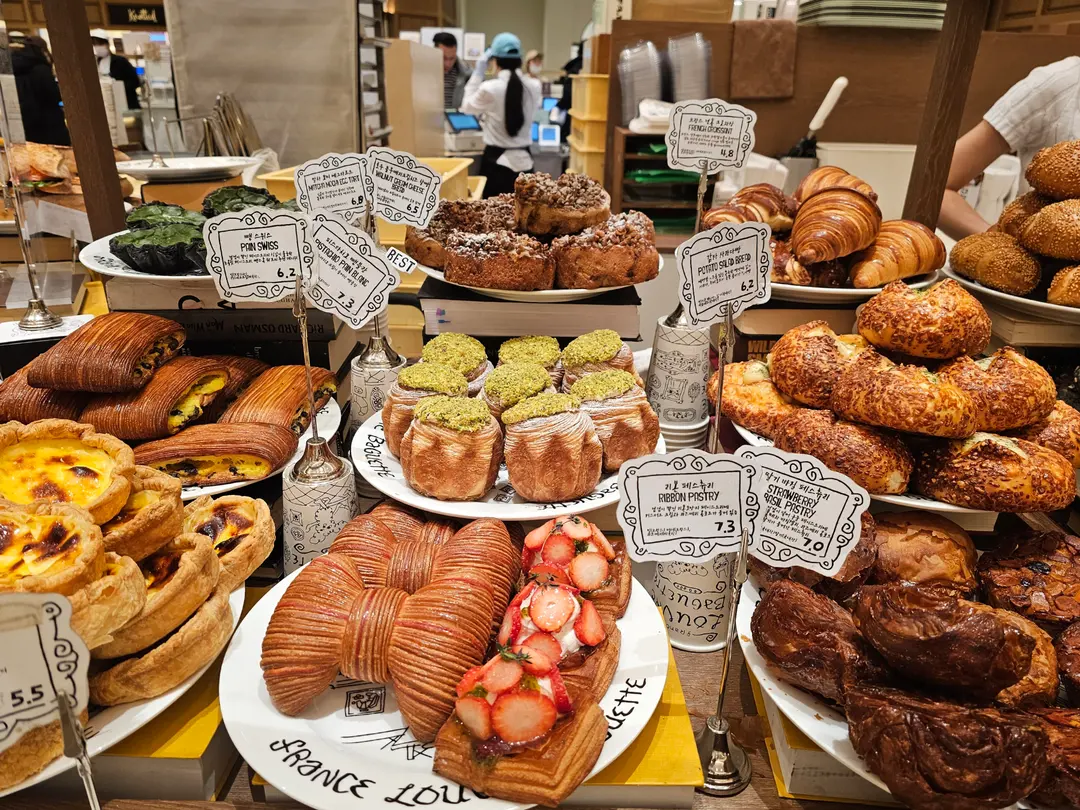
© Sweet Park at Shinsegae Gangnam
South Korea's bakery culture is well established, but the way consumers discover, buy and enjoy bakery products continues to change. Independent bakeries have become destinations, international dessert trends are being adapted into local products, and frozen bakery formats are finding new audiences beyond traditional retail.
These developments point to a market that is becoming more diverse. Consumers are not necessarily buying more bread simply because it is available. They are responding to different occasions, seeking particular products and balancing the appeal of premium experiences with the convenience and affordability of everyday food.
Several trends illustrate how Korea's bakery market is evolving.
Bread Tourism: Bakeries Become Destinations
The popularity of bbangji-sunrye, or bread pilgrimage, has helped transform independent bakeries into destinations in their own right.
Consumers increasingly travel to visit well-known bakeries, sometimes queuing for signature products or planning regional trips around particular food businesses. Social media plays an important role in spreading awareness, allowing a bakery outside Seoul to attract national attention.
This is not an entirely new behaviour, but its visibility and commercial influence have grown. A September 2026 report by ChosunBiz noted that Korean Google searches for bread had risen by 15.3% year on year between January and September. The report also highlighted the development of services such as bread taxis and storage lockers around popular bakery destinations.
The wider trend reflects how food discovery can contribute to regional identity and tourism. A distinctive product can become closely associated with a particular place, giving consumers a reason to visit beyond the purchase itself.
International Food Trends Are Being Localised
Korea's bakery and dessert market has a strong appetite for international inspiration, but global trends are rarely adopted without adaptation.
The Dubai-inspired dessert phenomenon is a recent example. What began with a particular combination of chocolate, pistachio and kataifi developed into a wider range of Korean bakery and confectionery products. Different businesses introduced their own interpretations, extending the concept beyond its original format.
This rapid localisation demonstrates the influence of social media, visual appeal and novelty on product development. It also shows how a trend can affect ingredient demand. The popularity of pistachios and kataifi, for example, created increased pressure on supply and contributed to price movements.
However, the commercial life of individual viral products can be short. The challenge for businesses is to understand which elements of a trend have lasting appeal, rather than relying entirely on temporary consumer excitement.
Frozen Bakery Is Moving Beyond Convenience
One of the more significant developments is the growing role of frozen bakery products.
Frozen bread and pastries have existed in the Korean market for years, particularly in foodservice and commercial production. What is changing is their visibility and the range of occasions in which consumers use them.
Frozen sandwiches are a particularly interesting example. Shinsegae Food's frozen sandwich sales increased from approximately 630,000 units in 2023 to more than five million in 2025. The company has also reported growing demand from cafés and other foodservice channels.
The appeal reflects several developments coming together: higher dining-out costs, demand for convenient meal options, more widespread use of air fryers and ovens, and improvements in freezing and thawing technology.
Frozen bakery products can offer businesses greater consistency and more flexible production, while allowing consumers to store convenient meals at home. For cafés, they can also provide a way to expand food menus without carrying out every stage of preparation on site.
This trend is therefore about more than convenience. It reflects a changing relationship between bakery production, foodservice and the home.
Premium Products and Everyday Value Are Developing Side by Side
Korean consumers continue to show interest in specialist bakeries, distinctive pastries and premium desserts. At the same time, rising food prices have made value an increasingly important consideration.
These behaviours are not contradictory. Consumers may spend more on a particular bakery visit or signature product while choosing more affordable options for everyday consumption.
The growth of convenience-store bakery ranges and frozen bakery products illustrates this distinction. Premium independent bakeries offer discovery and special occasions, while retail and frozen formats provide accessibility and value.
This creates different opportunities within the same market. Businesses need to understand whether consumers are purchasing a product as an occasional treat, a convenient meal or a regular household staple. The expectations around price, quality and presentation can differ considerably between these occasions.
Ingredient Innovation Is Becoming More Closely Linked to Production
As bakery businesses expand their product ranges and explore different formats, ingredient selection is becoming relevant to both product development and operational efficiency.
The demand for high-quality frozen dough, for example, is connected to the difficulty of recruiting skilled bakers and rising labour costs. Businesses can use prepared dough to simplify production while maintaining a wider selection of pastries and baked products.
At the same time, specialist ingredients continue to influence flavour, texture and product identity. Butter, flour, chocolate, cream, nuts and fruit preparations can help distinguish a product in a crowded market.
European baking traditions offer a wide range of ingredients and technical expertise, from French butter and pastry techniques to Italian flour and Belgian chocolate. Their relevance in Korea depends not simply on their origin, but on their performance, consistency, suitability for local tastes and commercial value.
The growing use of frozen and prepared bakery formats also places greater emphasis on how ingredients perform through processing, storage, thawing and reheating.
The Next Challenge: Moving Beyond Viral Products
Korea's bakery market is influenced by rapid product cycles. A new dessert or pastry can attract considerable attention, but consumer interest does not always translate into long-term demand.
The market is therefore developing along two parallel paths. One is driven by novelty, social media visibility and destination bakeries. The other is built around convenience, consistent quality, affordable pricing and everyday consumption.
The businesses best positioned to navigate these developments are likely to be those that understand both. A distinctive product may attract initial attention, but reliable quality, appropriate pricing and a sustainable production model are important for retaining customers.
A Market Defined by More Diverse Consumption
Korea's bakery market is not simply becoming more premium. It is becoming more varied in how products are discovered, produced, distributed and consumed.
Bread tourism reflects the growing importance of food discovery and regional identity. International dessert trends demonstrate the speed at which global ideas can be adapted locally. Frozen bakery products show how convenience and technology are changing traditional production and consumption patterns.
Together, these trends suggest that the future of the market will be shaped by the relationship between consumer experience, product innovation and production efficiency.
For the wider food industry, Korea offers an interesting example of how an established category can continue to evolve without abandoning its traditional foundations.
We work with European suppliers of high-quality ingredients, heritage food and beverage brands, and innovative nutritional solutions. If you would like to explore opportunities to introduce your products to markets across Asia, please get in touch with us via the Contact Us page.